Envy | Santo’s Party House

Posted: February 22nd, 2011 | Author: doug | Filed under: dougKIM photography, New York City, Nikon

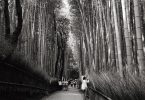
Envy; Nikon D700, 12-24mm Nikkor © Doug Kim

Envy; Nikon D700, 12-24mm Nikkor © Doug Kim


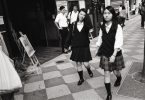
Envy, Tetsuya Fukagawa; Nikon D700, 35-70mm Nikkor © Doug Kim

Envy, Tetsuya Fukagawa; Nikon D700, 35-70mm Nikkor © Doug Kim


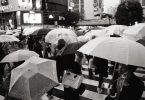
Envy, Tetsuya Fukagawa; Nikon D700, 35-70mm Nikkor © Doug Kim

Envy, Tetsuya Fukagawa; Nikon D700, 35-70mm Nikkor © Doug Kim


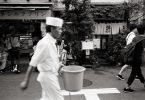
Envy, Nobukata Kawai; Nikon D700, 35-70mm Nikkor © Doug Kim

Envy, Nobukata Kawai; Nikon D700, 35-70mm Nikkor © Doug Kim


Tags: , , , | No Comments »


Hiroshi Sugimoto | Seascapes

Posted: January 12th, 2011 | Author: doug | Filed under: Film, Photography

Water and air. So very commonplace are these substances, they hardly attract attention―and yet they vouchsafe our very existence.
The beginnings of life are shrouded in myth: Let there water and air. Living phenomena spontaneously generated from water and air in the presence of light, though that could just as easily suggest random coincidence as a Deity. Let’s just say that there happened to be a planet with water and air in our solar system, and moreover at precisely the right distance from the sun for the temperatures required to coax forth life. While hardly inconceivable that at least one such planet should exist in the vast reaches of universe, we search in vain for another similar example.

Mystery of mysteries, water and air are right there before us in the sea. Every time I view the sea, I feel a calming sense of security, as if visiting my ancestral home; I embark on a voyage of seeing.

- Hiroshi Sugimoto

 North Atlantic Ocean, Cape Breton, 1996, Hiroshi Sugimoto

North Atlantic Ocean, Cape Breton, 1996, Hiroshi Sugimoto

Baltic Sea, near Rügen, 1996, Hiroshi Sugimoto

Baltic Sea, near Rügen, 1996, Hiroshi Sugimoto

Aegean Sea, Pillon, 1990, Hiroshi Sugimoto

Aegean Sea, Pillon, 1990, Hiroshi Sugimoto

Cascade River, Lake Superior, 1995, Hiroshi Sugimoto

Cascade River, Lake Superior, 1995, Hiroshi Sugimoto

Ligurian Sea, near Saviore, 1993, Hiroshi Sugimoto

Ligurian Sea, near Saviore, 1993, Hiroshi Sugimoto


Tags: , , | 3 Comments »


Hiroshi Watanabe | Suo Sarumawashi

Posted: December 13th, 2010 | Author: doug | Filed under: Books, Film, Photography

From the introduction to the Photo-Eye edition of Suo Sarumawashi:

Sarumawashi, literally “monkey dancing” evolved over a 1000-year history in Japan. Ancient Japanese chronicles refer to it as a form of religious ritual designed to protect the horses of warriors. It later developed into a popular form of festival entertainment, and was performed all over Japan from temples to imperial courts. Today, Sarumawashi is ranked alongside Noh and Kabuki as one of the oldest and most traditional of Japan’s performing arts. It features acrobatic stunts and comedic skits performed by highly trained macaque monkeys.

Choromatsu 2, Suo Sarumawashi by Hiroshi Watanabe

Choromatsu 2, Suo Sarumawashi by Hiroshi Watanabe

Choromatsu, Suo Sarumawashi by Hiroshi Watanabe

Choromatsu, Suo Sarumawashi by Hiroshi Watanabe

"Kanpei Counting Fingers", Suo Sarumawashi by Hiroshi Watanabe

Kanpei Counting Fingers, Suo Sarumawashi by Hiroshi Watanabe

"Kojiro 2", Suo Sarumawashi by Hiroshi Watanabe

Kojiro 2, Suo Sarumawashi by Hiroshi Watanabe

"Big in Bucket", Suo Sarumawashi by Hiroshi Watanabe

Big in Bucket, Suo Sarumawashi by Hiroshi Watanabe

"Genki", Suo Sarumawashi by Hiroshi Watanabe

Genki, Suo Sarumawashi by Hiroshi Watanabe

"Kojiro and Kurimatsu", Suo Sarumawashi by Hiroshi Watanabe

Kojiro and Kurimatsu, Suo Sarumawashi by Hiroshi Watanabe

"Aikichi 2", Suo Sarumawashi by Hiroshi Watanabe

Aikichi 2, Suo Sarumawashi by Hiroshi Watanabe

"Aikichi", Suo Sarumawashi by Hiroshi Watanabe

Aikichi, Suo Sarumawashi by Hiroshi Watanabe

"Aikichi with Bamboo Steve", Suo Sarumawashi by Hiroshi Watanabe

Aikichi with Bamboo Steve, Suo Sarumawashi by Hiroshi Watanabe

"Fukunosuke 2", Suo Sarumawashi by Hiroshi Watanabe

Fukunosuke 2, Suo Sarumawashi by Hiroshi Watanabe

"Fukunosuke", Suo Sarumawashi by Hiroshi Watanabe

Fukunosuke, Suo Sarumawashi by Hiroshi Watanabe


Tags: , | No Comments »


Hiroshi Watanabe | Places

Posted: June 21st, 2010 | Author: doug | Filed under: Film, Los Angeles, New York City, Photography

El Arbolito Park, Quito, Ecuador, 2002 © Hiroshi Watanabe

El Arbolito Park, Quito, Ecuador, 2002 © Hiroshi Watanabe

I go to places that captivate and intrigue me. I am interested in what humans do. I seek to capture people, traditions, and locales that first and foremost are of personal interest. I immerse myself with information on the places prior to leaving, but I try to avoid firm, preconceived ideas. I strive for both calculation and discovery in my work, keeping my mind open for surprises. At times, I envision images I’d like to capture, but when I actually look through the viewfinder, my mind goes blank and I photograph whatever catches my eye. Photographs I return with are usually different from my original concepts. My photographs reflect both genuine interest in my subject as well as a respect for the element of serendipity, while other times I seek pure beauty. The pure enjoyment of this process drives and inspires me. I believe there’s a thread that connects all of my work — my personal vision of the world as a whole. I make every effort to be a faithful visual recorder of the world around me, a world in flux that, at very least in my mind, deserves preservation.

Artist’s statement, Hiroshi Watanabe

Music Notes, Nakatsugawa, Japan, 2004 © Hiroshi Watanabe

Music Notes, Nakatsugawa, Japan, 2004 © Hiroshi Watanabe

White Terns, Midway Atoll, 2000 © Hiroshi Watanabe

White Terns, Midway Atoll, 2000 © Hiroshi Watanabe

Whales Eye, Anaheim, CA, 2004 © Hiroshi Watanabe

Whales Eye, Anaheim, CA, 2004 © Hiroshi Watanabe

Bora Bora, Tahiti, 1997 © Hiroshi Watanabe

Bora Bora, Tahiti, 1997 © Hiroshi Watanabe

Mandalay, Burma, 2000 © Hiroshi Watanabe

Mandalay, Burma, 2000 © Hiroshi Watanabe

Santa Monica Pier, 2000 © Hiroshi Watanabe

Santa Monica Pier, 2000 © Hiroshi Watanabe

Battery Park, New York, 2000 © Hiroshi Watanabe

Battery Park, New York, 2000 © Hiroshi Watanabe

Liberty State Park, New Jersey, 2004 © Hiroshi Watanabe

Liberty State Park, New Jersey, 2004 © Hiroshi Watanabe

Tsutenkaku, Osaka, Japan, 2004 © Hiroshi Watanabe

Tsutenkaku, Osaka, Japan, 2004 © Hiroshi Watanabe

Salmon Heads, Sapporo, Japan, 2004 © Hiroshi Watanabe

Salmon Heads, Sapporo, Japan, 2004 © Hiroshi Watanabe

International Fountain, Seattle, 2000 © Hiroshi Watanabe

International Fountain, Seattle, 2000 © Hiroshi Watanabe

China Town, Portland, Oregon, 2004 © Hiroshi Watanabe

China Town, Portland, Oregon, 2004 © Hiroshi Watanabe

Standing Woman, Metropolitan Museum of Art, New York, 1997 © Hiroshi Watanabe

Standing Woman, Metropolitan Museum of Art, New York, 1997 © Hiroshi Watanabe

Kabukiza, Tokyo, Japan, 2004 © Hiroshi Watanabe

Kabukiza, Tokyo, Japan, 2004 © Hiroshi Watanabe


Tags: , , , , , , , , , , , , , , , , , , , | 2 Comments »


Akira Kurosawa | Group Compositions in Seven Samurai

Posted: May 23rd, 2010 | Author: doug | Filed under: Cinema, Quotes

Kurosawa was one of the 20th century’s master auteurs and perhaps my favorite director. His pairing with Toshiro Mifune over 16 films constitute one of the, if not the, most productive actor-director collaboration in the history of cinema. And the greatest of these is Seven Samurai, one of the best films ever made and one that I continually revisit.

Kurosawa said he studied the master as often as he could, meaning John Ford. And though he said this in reference to Ford’s composition and framing, I believe that he far surpassed Ford in this respect. Kurosawa’s compositions imbue his stories with such power and dynamism that even his noirs or domestic scenes seem gigantic.

All of his films contain his usual bravura compositions, but it is with his ensemble films like Seven Samurai and High and Low that you get to see Kurosawa craft such classic fluid group compositions, sometimes composed of dozens of actors, never crowded or confusing, always clear and focused, the menagerie acting like a visual chorus.

Though he was more known for his telephoto lens work, Seven Samurai marks the transition point where Kurosawa moves away from the wide angle lens in favor of the foreshortening and flattening effect of the long lens. This film then has some amazing cinematography by the great Asakazu Nakai using both lenses. Kurosawa and Nakai show their complete mastery of the dynamic wide-angle compositions as the camera is not locked down but moves from one composition to another, all so breathtaking that they form a dynamic texture that propels the narrative over three hours.

If you’ve never seen this movie, watch as each character progresses and reacts and moves in the scene as individuals choreographed in these organic group portraits. This is throwaway virtuoso filmmaking at it’s best. Throwaway because the point of a scene or a shot is never the camera or the composition but always the characters and the drama. Everything is controlled, deliberate and manufactured to be in service of the story.

Seven Samurai, Akira Kurosawa 1954

Seven Samurai, Akira Kurosawa 1954

The term ‘giant’ is used too often to describe artists. But in the case of Akira Kurosawa, we have one of the rare instances where the term fits.

-Martin Scorsese

Seven Samurai, Akira Kurosawa 1954

Seven Samurai, Akira Kurosawa 1954

Seven Samurai, Akira Kurosawa 1954

Seven Samurai, Akira Kurosawa 1954

In this three image sequence below, the still frames are taken from the scene where the samurai meet the village patriarch for the first time. There were three shots of incredibly complexity. Pans and dolly moves around the room were blocked so skillfully that no actor’s face was ever occluded, the camera moving from perfect composition to perfect composition, each actor facing a different direction, each face and pose in character, each character processing the conversation a different way.

This is what makes Kurosawa a master. These complex, staged moves are barely noticeable to the viewer, the camera never intrudes on the story, the virtuoso hand never makes itself felt.

Seven Samurai, Akira Kurosawa 1954

Seven Samurai, Akira Kurosawa 1954

Seven Samurai, Akira Kurosawa 1954

Seven Samurai, Akira Kurosawa 1954

Seven Samurai, Akira Kurosawa 1954

Seven Samurai, Akira Kurosawa 1954

You see an absolutely brilliant film later, as an adult, and you walk out thinking about what to have for dinner. Whereas something like Jaws winds up having a huge effect on me. If only my parents had been taking me to Kurosawa films when I was eight, but no.

-Ann Patchett

Seven Samurai, Akira Kurosawa 1954

Seven Samurai, Akira Kurosawa 1954

Seven Samurai, Akira Kurosawa 1954

Seven Samurai, Akira Kurosawa 1954

Good Westerns are liked by everyone. Since humans are weak, they want to see good people and great heroes. Westerns have been done over and over again, and in the process a kind of grammar has evolved. I have learned much from this grammar of the Western.

-Akira Kurosawa

Seven Samurai, Akira Kurosawa 1954

Seven Samurai, Akira Kurosawa 1954

Seven Samurai, Akira Kurosawa 1954

Seven Samurai, Akira Kurosawa 1954

Seven Samurai, Akira Kurosawa 1954

Seven Samurai, Akira Kurosawa 1954

Being a kid growing up with Kurosawa films and watching Sergio Leone movies just made me love what it could do to you, and how it could influence you – make you dream.

-Antoine Fuqua

Seven Samurai, Akira Kurosawa 1954

Seven Samurai, Akira Kurosawa 1954

Man is a genius when he is dreaming.

-Akira Kurosawa

Seven Samurai, Akira Kurosawa 1954

Seven Samurai, Akira Kurosawa 1954

Seven Samurai, Akira Kurosawa 1954

Seven Samurai, Akira Kurosawa 1954

In a mad world, only the mad are sane.

-Akira Kurosawa

Seven Samurai, Akira Kurosawa 1954

Seven Samurai, Akira Kurosawa 1954

Movie directors, or should I say people who create things, are very greedy and they can never be satisfied, … That’s why they can keep on working. I’ve been able to work for so long because I think next time, I’ll make something good.

-Akira Kurosawa

Seven Samurai, Akira Kurosawa 1954

Seven Samurai, Akira Kurosawa 1954

Seven Samurai, Akira Kurosawa 1954

Seven Samurai, Akira Kurosawa 1954

Seven Samurai, Akira Kurosawa 1954

Seven Samurai, Akira Kurosawa 1954

With a good script, a good director can produce a masterpiece. With the same script, a mediocre director can produce a passable film. But with a bad script even a good director can’t possibly make a good film. For truly cinematic expression, the camera and the microphone must be able to cross both fire and water. The script must be something that has the power to do this.

-Akira Kurosawa

Seven Samurai, Akira Kurosawa 1954

Seven Samurai, Akira Kurosawa 1954

Seven Samurai, Akira Kurosawa 1954

Seven Samurai, Akira Kurosawa 1954

Seven Samurai, Akira Kurosawa 1954

Seven Samurai, Akira Kurosawa 1954

In all my films, there`s three or maybe four minutes of real cinema.

-Akira Kurosawa

Seven Samurai, Akira Kurosawa 1954

Seven Samurai, Akira Kurosawa 1954

Seven Samurai, Akira Kurosawa 1954

Seven Samurai, Akira Kurosawa 1954

Human beings share the same common problems. A film can only be understood if it depicts these properly.

-Akira Kurosawa

Seven Samurai, Akira Kurosawa 1954

Seven Samurai, Akira Kurosawa 1954


Tags: , , , , , , , , , , , | 3 Comments »


Daido Moriyama | Shinjuku

Posted: December 17th, 2009 | Author: doug | Filed under: Books, Film, Photography, Quotes

One of my favorite single series is Daido Moriyama’s book of wanderings in the Shinjuku neighborhood of Tokyo. Viewing his fractured, scattered, shattered images is to embark on a journey as a furtive outsider, stalking the streets, seeking prey in alleys, noodle shops and sex bars.

Shinjuku, Daido Moriyama

Shinjuku, Daido Moriyama

As long as I can walk, I will continue wandering the streets.

-Daido Moriyama

Shinjiku, Daido Moriyama

Shinjuku, Daido Moriyama

I want to express the realness of Japan. I want to show what is really going on.

-Daido Moriyama

Shinjuku, Daido Moriyama

Shinjuku, Daido Moriyama

I’m not always a stray dog. Sometimes I’m a cat or an insect.

-Daido Moriyama

Shinjuku, Daido Moriyama

The cover of the limited signed edition of Shinjuku, Daido Moriyama

The streets are my territory and I still wander them aimlessly with my camera.

-Daido Moriyama


Tags: , , , , | No Comments »


André Kertész | Rainy Day, Tokyo, 1968

Posted: November 17th, 2009 | Author: doug | Filed under: Film, Photography, Quotes

Rainy Day, Tokyo, 1968, André Kertész

Rainy Day, Tokyo, 1968, André Kertész

You do not have to imagine things; reality gives you all you need. I was in Tokyo. It was a rainy day, and I had just bought a new lens. I took some test shots out of the window of my hotel when I saw these people crossing the street–a perfect composition.

-André Kertész, Kertész on Kertész


Tags: , , , , , | No Comments »