Josef Koudelka | Prague Spring

posted by doug on 2009.10.22, under Film, History, Photography, Quotes
22:

Josef Koudelka told Sean O’Hagan of the Guardian that it was a year after the Soviet invasion of Prague when he was in London traveling with a theater group, that he first saw his images published. He had come out of the hotel and some members of the group were looking at his photos in The Sunday Times, credited to the initials P.P. (Prague Photographer), a pseudonym he used out of fear of reprisal.

They showed me the magazine where it said that these pictures had been taken by an unknown photographer from Prague and smuggled out of the country. I could not tell anyone that they were my photographs. It was a very strange feeling. From that moment, I was afraid to go back to Czechoslovakia because I knew that if they wanted to find out who the unknown photographer was, they could do it.

Thus began one of the most important and prolific photographic careers in the last fifty years and a period of freedom and wandering for Koudelka who said that “for 17 years I never paid any rent.”

Koudelka turned to photography in 1967, abandoning a career in aeronautical engineering. He started shooting gypsies and theater groups, until the night of August 21st a year later when the Soviets invaded Prague. He had never documented a major event before. He took to the streets to capture this singular and historic moment. In that seven day period, Koudelka took over 5,000 photographs on the streets of Prague, getting shot at once and being pursued through crowds by soldiers. He was 30 years old.

The photos anonymously reached Magnum Photos in New York and later earned him the Robert Capa award.

The mother of my son, an Italian lady, she once told me, ‘Josef, you go though life and get all this positive energy, and all the sadness, you just throw it behind you and it drops into the bag you carry on your back. Then, when you photograph, it all comes out.’

-Josef Koudelka

You know, people say, ‘Oh, Josef, he is the eternal outsider,’ but on the contrary I try always to be an insider, both as a photographer and as a man. I am part of everything that is around me.

-Josef Koudelka

PRAGUE, Czechoslovakia—Invading Warsaw Pact troops in front of the radio headquarters, August 1968. © Josef Koudelka / Magnum Photos

PRAGUE, Czechoslovakia—Invading Warsaw Pact troops in front of the radio headquarters, August 1968. © Josef Koudelka / Magnum Photos

PRAGUE, Czechoslovakia—Warsaw Pact tanks invade Prague, Aug. 21, 1968.

PRAGUE, Czechoslovakia—Warsaw Pact tanks invade Prague, Aug. 21, 1968. © Josef Koudelka / Magnum Photos

PRAGUE, Czechoslovakia—The invasion by Warsaw Pact troops, August 1968.

PRAGUE, Czechoslovakia—The invasion by Warsaw Pact troops, August 1968. © Josef Koudelka / Magnum Photos

PRAGUE, Czechoslovakia—Near the radio headquarters, Aug. 21, 1968.  © Josef Koudelka / Magnum Photos

PRAGUE, Czechoslovakia—Near the radio headquarters, Aug. 21, 1968. © Josef Koudelka / Magnum Photos

PRAGUE, Czechoslovakia—The invasion by Warsaw Pact troops, August 1968.  © Josef Koudelka / Magnum Photos

PRAGUE, Czechoslovakia—The invasion by Warsaw Pact troops, August 1968. © Josef Koudelka / Magnum Photos

PRAGUE, Czechoslovakia—The invasion by Warsaw Pact troops, August 1968. © Josef Koudelka / Magnum Photos

PRAGUE, Czechoslovakia—The invasion by Warsaw Pact troops, August 1968. © Josef Koudelka / Magnum Photos

PRAGUE, Czechoslovakia—August 1968. © Josef Koudelka / Magnum Photos

PRAGUE, Czechoslovakia—August 1968. © Josef Koudelka / Magnum Photos

PRAGUE, Czechoslovakia—The invasion by Warsaw Pact troops, August 1968. © Josef Koudelka / Magnum Photos

PRAGUE, Czechoslovakia—The invasion by Warsaw Pact troops, August 1968. © Josef Koudelka / Magnum Photos

PRAGUE, Czechoslovakia—In front of the radio headquarters, August 1968. © Josef Koudelka / Magnum Photos

PRAGUE, Czechoslovakia—In front of the radio headquarters, August 1968. © Josef Koudelka / Magnum Photos

PRAGUE, Czechoslovakia—Warsaw Pact tanks invade Prague, August 1968. © Josef Koudelka / Magnum Photos

PRAGUE, Czechoslovakia—Warsaw Pact tanks invade Prague, August 1968. © Josef Koudelka / Magnum Photos

PRAGUE, Czechoslovakia—Near the radio headquarters, August 1968. © Josef Koudelka / Magnum Photos

PRAGUE, Czechoslovakia—Near the radio headquarters, August 1968. © Josef Koudelka / Magnum Photos

PRAGUE, Czechoslovakia—Warsaw Pact tanks invade Prague, August 1968. © Josef Koudelka / Magnum Photos

PRAGUE, Czechoslovakia—Warsaw Pact tanks invade Prague, August 1968. © Josef Koudelka / Magnum Photos

PRAGUE, Czechoslovakia—The body of a young Czech, killed for having tried to drape his flag over a Russian tank, August 1968. © Josef Koudelka / Magnum Photos

PRAGUE, Czechoslovakia—The body of a young Czech, killed for having tried to drape his flag over a Russian tank, August 1968. © Josef Koudelka / Magnum Photos

PRAGUE, Czechoslovakia—A poster in a window with a dove stabbed through the middle, August 1968. © Josef Koudelka / Magnum Photos

PRAGUE, Czechoslovakia—A poster in a window with a dove stabbed through the middle, August 1968. © Josef Koudelka / Magnum Photos

PRAGUE, Czechoslovakia—The Czechoslovakian flag, August 1968. © Josef Koudelka / Magnum Photos

PRAGUE, Czechoslovakia—The Czechoslovakian flag, August 1968. © Josef Koudelka / Magnum Photos

PRAGUE, Czechoslovakia—August 1968. © Josef Koudelka / Magnum Photos

PRAGUE, Czechoslovakia—August 1968. © Josef Koudelka / Magnum Photos

PRAGUE, Czechoslovakia—Near the radio headquarters, August 1968. © Josef Koudelka / Magnum Photos

PRAGUE, Czechoslovakia—Near the radio headquarters, August 1968. © Josef Koudelka / Magnum Photos

PRAGUE, Czechoslovakia—August 1968. © Josef Koudelka / Magnum Photos

PRAGUE, Czechoslovakia—August 1968. © Josef Koudelka / Magnum Photos

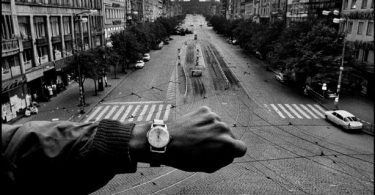
PRAGUE, Czechoslovakia—Vinohradska Avenue, August 1968. © Josef Koudelka / Magnum Photos

PRAGUE, Czechoslovakia—Vinohradska Avenue, August 1968. © Josef Koudelka / Magnum Photos

PRAGUE, Czechoslovakia—August 1968. © Josef Koudelka / Magnum Photos

PRAGUE, Czechoslovakia—August 1968. © Josef Koudelka / Magnum Photos

Mad Men | Penn Station

posted by doug on 2009.08.28, under Architecture, Film, History, New York City, Photography, Quotes
28:

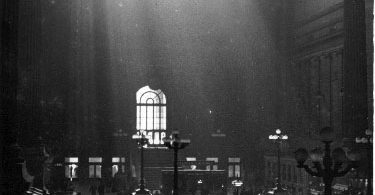
This past Sunday, “Mad Men” (Season 3 Episode 2) referenced the venerable architecture critic Ada Louise Huxtable when Paul Kinsey and Pete Campbell were meeting with the developers of Madison Square Garden, discussing plans to knock down Penn Station.

It quotes Ms. Huxtable’s article in the New York Times from 1963 about Penn Station, called “How to Kill a City”. The New York Times has offered the full article in PDF to download and read here.

A eulogy in October of ‘63 ran in the editorial section:

Any city gets what it admires, will pay for, and, ultimately, deserves. Even when we had Penn Station, we couldn’t afford to keep it clean. We want and deserve tin-can architecture in a tinhorn culture. And we will probably be judged not by the monuments we build but by those we have destroyed.

- “Farewell to Penn Station,” New York Times, Oct 30, 1963

Comparing the old to the new, Vincent Scully of Yale University remarked,

One entered the city like a god. One scuttles in now like a rat.

The original Penn Station was a steel and glass shrine to transportation, an elegant Beaux-Arts temple with its 150 foot high ceilings and a waiting room modeled after the Roman Baths of Caracalla.

Now it is an underground Habitrail™, lit by yellowed fluorescents and flavored by the odors of Roy Rogers™ and Cinnabon™ stinking down the corridors. Excepting the mad scurry for Amtrak platforms after the track number has finally been revealed on the big board, it is an oppressive space completely without joy.

photographer unknown

photographer unknown

Couple in Penn Station Sharing Farewell Kiss Before He Ships Off to War During WWII by Alfred Eisenstaedt

Couple in Penn Station Sharing Farewell Kiss Before He Ships Off to War During WWII by Alfred Eisenstaedt

Life Magazine has posted an entire series by Eisenstaedt of WWII soldiers’ farewells at Penn Station here.

Penn Station, circa 1910, Detroit Publishing Company

Circa 1910, Detroit Publishing Company; click to view the full size image

photographer unknown

Berenice Abbott, printed ca. 1935

AP Photo/Matty Zimmerman

AP Photo/Matty Zimmerman

photograph by Peter Moore

Peter Moore; click to view full size

Peter Moore and his wife Barbara documented the death of Penn Station and published their work, The Destruction Of Penn Station.

photographer unknown

today

The only consolation is that Penn Station’s demolition was a large factor in the creation of the Landmarks Preservation Commission in 1965.

Stonewall Jackson

posted by doug on 2009.05.24, under History, Quotes
24:

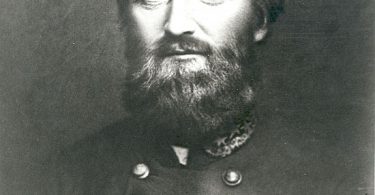
Stonewall Jackson, one of the great and almost mythical military genius’ of the Civil War, was mistakenly shot by his own men on the night of May 2, 1863 at the The Battle of Chancellorsville.

Dr. McGuire, present at his deathbed, captured Jackson’s last words:

A few moments before he died he cried out in his delirium, “Order A.P. Hill to prepare for action! Pass the infantry to the front rapidly! Tell Major Hawks”—then stopped, leaving the sentence unfinished. Presently a smile of ineffable sweetness spread itself over his pale face, and he said quietly, and with an expression, as if of relief, “Let us cross over the river, and rest under the shade of the trees.”

stonewall_jackson

Thomas Jonathan "Stonewall" Jackson

George S. Patton

posted by doug on 2009.05.09, under History, Quotes
09:

Though it is worthy of complaint that Patton is too often quoted, I still enjoy his ostentatious style and absolute mastery of logistics. Here are some favorites:

“Audacity, audacity, always audacity.”

“A good plan violently executed now is better than a perfect plan executed next week.”

“A piece of spaghetti or a military unit can only be led from the front end.”

“All very successful commanders are prima donnas and must be so treated.”

“I don’t measure a man’s success by how high he climbs but how high he bounces when he hits bottom.”

“If everyone is thinking alike, then somebody isn’t thinking.”

“The object of war is not to die for your country but to make the other bastard die for his.”

“Watch what people are cynical about, and one can often discover what they lack.”

On instructions to reconnaissance troops, “Just drive down the road, until you get blown up.”

Patton in WWI

Patton in WWI

pagetop