Elvis Presley | The King is dead. Long Live the King

Elvis Presley © St. Louis Globe-Democrat 1957
Before Elvis there was nothing.
-John Lennon

Elvis Presley © St. Louis Globe-Democrat 1957
Before Elvis there was nothing.
-John Lennon
Loud and proud.
Most New Yorkers hate this parade as it is one of the loudest things to ever occur in the history of mankind. And it is a long all day affair, bifurcating the city from Bryant Park to the mid-70s.
I love it. As long as you don’t get trapped behind the parade route and are mindful of the peak hours for revelers on the subway, you’ll be fine. Last year, a nice gentleman cleared out an entire car of the 5 train because his vomit was sloshing up and down the car.
There are two things I do not understand:
First, there must have been a beauty pageant every six minutes to produce all the winners I saw.
Second, I have been to Puerto Rico and there were less Puerto Ricans there than on Fifth Avenue that Sunday.

2010 Puerto Rican Day parade; Nikon F5, 35-70mm Nikkor, Kodak Tri-X © Doug Kim

2010 Puerto Rican Day parade; Nikon F5, 35-70mm Nikkor, Kodak Tri-X © Doug Kim

2010 Puerto Rican Day parade; Nikon F5, 35-70mm Nikkor, Kodak Tri-X © Doug Kim

2010 Puerto Rican Day parade; Nikon F5, 35-70mm Nikkor, Kodak Tri-X © Doug Kim

2010 Puerto Rican Day parade; Nikon F5, 35-70mm Nikkor, Kodak Tri-X © Doug Kim

2010 Puerto Rican Day parade; Nikon F5, 35-70mm Nikkor, Kodak Tri-X © Doug Kim

2010 Puerto Rican Day parade; Nikon F5, 35-70mm Nikkor, Kodak Tri-X © Doug Kim

2010 Puerto Rican Day parade; Nikon F5, 35-70mm Nikkor, Kodak Tri-X © Doug Kim

2010 Puerto Rican Day parade; Nikon F5, 35-70mm Nikkor, Kodak Tri-X © Doug Kim

2010 Puerto Rican Day parade; Nikon F5, 35-70mm Nikkor, Kodak Tri-X © Doug Kim

2010 Puerto Rican Day parade; Nikon F5, 35-70mm Nikkor, Kodak Tri-X © Doug Kim

2010 Puerto Rican Day parade; Nikon F5, 35-70mm Nikkor, Kodak Tri-X © Doug Kim

2010 Puerto Rican Day parade; Nikon F5, 35-70mm Nikkor, Kodak Tri-X © Doug Kim

2010 Puerto Rican Day parade; Nikon F5, 35-70mm Nikkor, Kodak Tri-X © Doug Kim

2010 Puerto Rican Day parade; Nikon F5, 35-70mm Nikkor, Kodak Tri-X © Doug Kim

2010 Puerto Rican Day parade; Nikon F5, 35-70mm Nikkor, Kodak Tri-X © Doug Kim

2010 Puerto Rican Day parade; Nikon F5, 35-70mm Nikkor, Kodak Tri-X © Doug Kim

2010 Puerto Rican Day parade; Nikon F5, 35-70mm Nikkor, Kodak Tri-X © Doug Kim
That’s my technique with people. I’m sort of a fly on the wall. You try not to interfere, hang around, hope that they don’t even notice you, and if they do, they don’t care.
-John Dominis
Sports photography is extremely tough. It may be the most active of photography genres as games and events are being recorded by thousands of photographers every day. The moments are captured and the action is documented to convey what has occurred but few images ever break through this base level of reportage to become iconic moments. Think of it. How many great sports photographs can you remember? Muhammad Ali standing over Sonny Liston (in 1965 also), Mary Decker’s fall at the 1984 Olympics, the Black Power salute by Tommie Smith and John Carlos performed at the 1968 Olympics.
Is that it? Is it because sports photography is overshadowed by the video of these great moments that we are watching live? Or that what strikes most sports fans are the unusual photos, the physically incredible images that can have little lasting value; the moment of impact, crashes, great catches, etc. I do not know.
This shot of Mickey Mantle has always been an important one to me. Ever since I first saw it, this image has been burned into my eye, this great moment of sour frustration and dejection by one of the greats as he heads back down into the dugout. The empty frame, the curve of his body from the S line of his spine, crowning to his bowed head, and the delicate dancer’s line of his arm to the splayed out fingers to the batting helmet looking forlorn hanging in mid air as if on the head of the person to blame for Mantle’s mood.
There is so much emotion and drama in sports but so few images capture something that seems more complicated than victory or defeat.

El Arbolito Park, Quito, Ecuador, 2002 © Hiroshi Watanabe
I go to places that captivate and intrigue me. I am interested in what humans do. I seek to capture people, traditions, and locales that first and foremost are of personal interest. I immerse myself with information on the places prior to leaving, but I try to avoid firm, preconceived ideas. I strive for both calculation and discovery in my work, keeping my mind open for surprises. At times, I envision images I’d like to capture, but when I actually look through the viewfinder, my mind goes blank and I photograph whatever catches my eye. Photographs I return with are usually different from my original concepts. My photographs reflect both genuine interest in my subject as well as a respect for the element of serendipity, while other times I seek pure beauty. The pure enjoyment of this process drives and inspires me. I believe there’s a thread that connects all of my work — my personal vision of the world as a whole. I make every effort to be a faithful visual recorder of the world around me, a world in flux that, at very least in my mind, deserves preservation.
Artist’s statement, Hiroshi Watanabe

Music Notes, Nakatsugawa, Japan, 2004 © Hiroshi Watanabe

White Terns, Midway Atoll, 2000 © Hiroshi Watanabe

Whales Eye, Anaheim, CA, 2004 © Hiroshi Watanabe

Bora Bora, Tahiti, 1997 © Hiroshi Watanabe

Mandalay, Burma, 2000 © Hiroshi Watanabe

Santa Monica Pier, 2000 © Hiroshi Watanabe

Battery Park, New York, 2000 © Hiroshi Watanabe

Liberty State Park, New Jersey, 2004 © Hiroshi Watanabe

Tsutenkaku, Osaka, Japan, 2004 © Hiroshi Watanabe

Salmon Heads, Sapporo, Japan, 2004 © Hiroshi Watanabe

International Fountain, Seattle, 2000 © Hiroshi Watanabe

China Town, Portland, Oregon, 2004 © Hiroshi Watanabe

Standing Woman, Metropolitan Museum of Art, New York, 1997 © Hiroshi Watanabe

Kabukiza, Tokyo, Japan, 2004 © Hiroshi Watanabe
A couple of weeks ago, I dropped my 1TB external drive onto my hardwood floor and lost all of my digital images and negative scans, spanning 12 years of shooting. Not too worried because I still have my negatives and CDs and DVDs of those scans. The digital images are lost and it kills me to lose a lot of great shots and happy snaps of some cherished times. But honestly, I always felt that what I was shooting on film was more important.
I had some scans from the San Gennaro Festival last year of the cannoli eating contest and other street shots but I knew I was missing another roll somewhere. Then the week after losing my hard drive, I found a few rolls of Tri-X in my fridge in the butter compartment. Moron.
I should hide film from myself more often. Makes for a nice treat during spring cleaning.

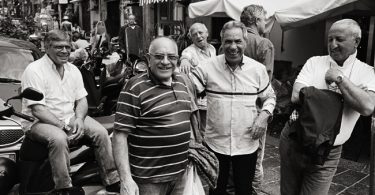
San Gennaro Festival 2009, Little Italy; Leica M6 TTL .58, 35mm summicron, Kodak Tri-X © Doug Kim

San Gennaro Festival 2009, Little Italy; Leica M6 TTL .58, 35mm summicron, Kodak Tri-X © Doug Kim

San Gennaro Festival 2009, Little Italy; Leica M6 TTL .58, 35mm summicron, Kodak Tri-X © Doug Kim

San Gennaro Festival 2009, Little Italy; Leica M6 TTL .58, 35mm summicron, Kodak Tri-X © Doug Kim

San Gennaro Festival 2009, Little Italy; Leica M6 TTL .58, 35mm summicron, Kodak Tri-X © Doug Kim
Some people spend their entire lives reading but never get beyond reading the words on the page, they don’t understand that the words are merely stepping stones placed across a fast-flowing river, and the reason they’re there is so that we can reach the farther shore, it’s the other side that matters
- José Saramago

José Saramago
Every man has his own patch of earth to cultivate. What’s important is that he dig deep.
- José Saramago
In photography, the smallest thing can be a great subject. The little, human detail can become a Leitmotiv.
-Henri Cartier-Bresson

PARIS—A march in support of French President Charles De Gaulle on the Champs-Elysees, from the Place de la Concorde to the Arc de Triomphe, May 1968. © Henri Cartier-Bresson / Magnum Photos

PARIS—Galeries Lafayette, 1968. © Henri Cartier-Bresson / Magnum Photos

PARIS—1967. © Henri Cartier-Bresson / Magnum Photos

PARIS—Galeries Lafayette department store, 1967. © Henri Cartier-Bresson / Magnum Photos

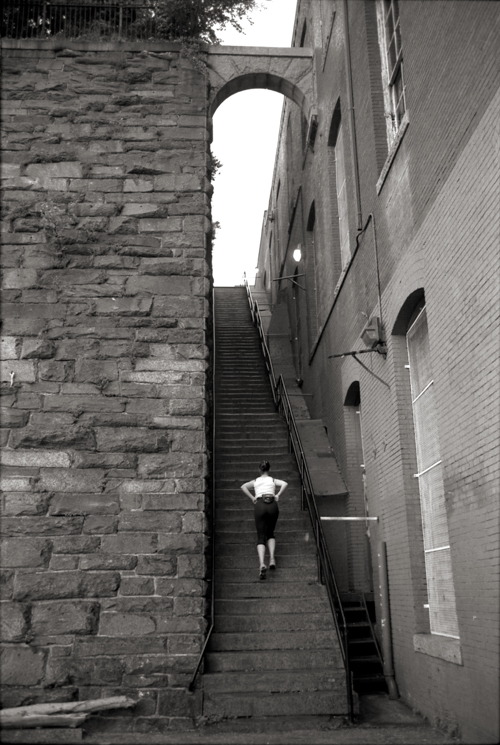
Montgomery, Alabama; Leica M6 TTL 0.58, 35mm summicron, Agfa APX 400 © Doug Kim